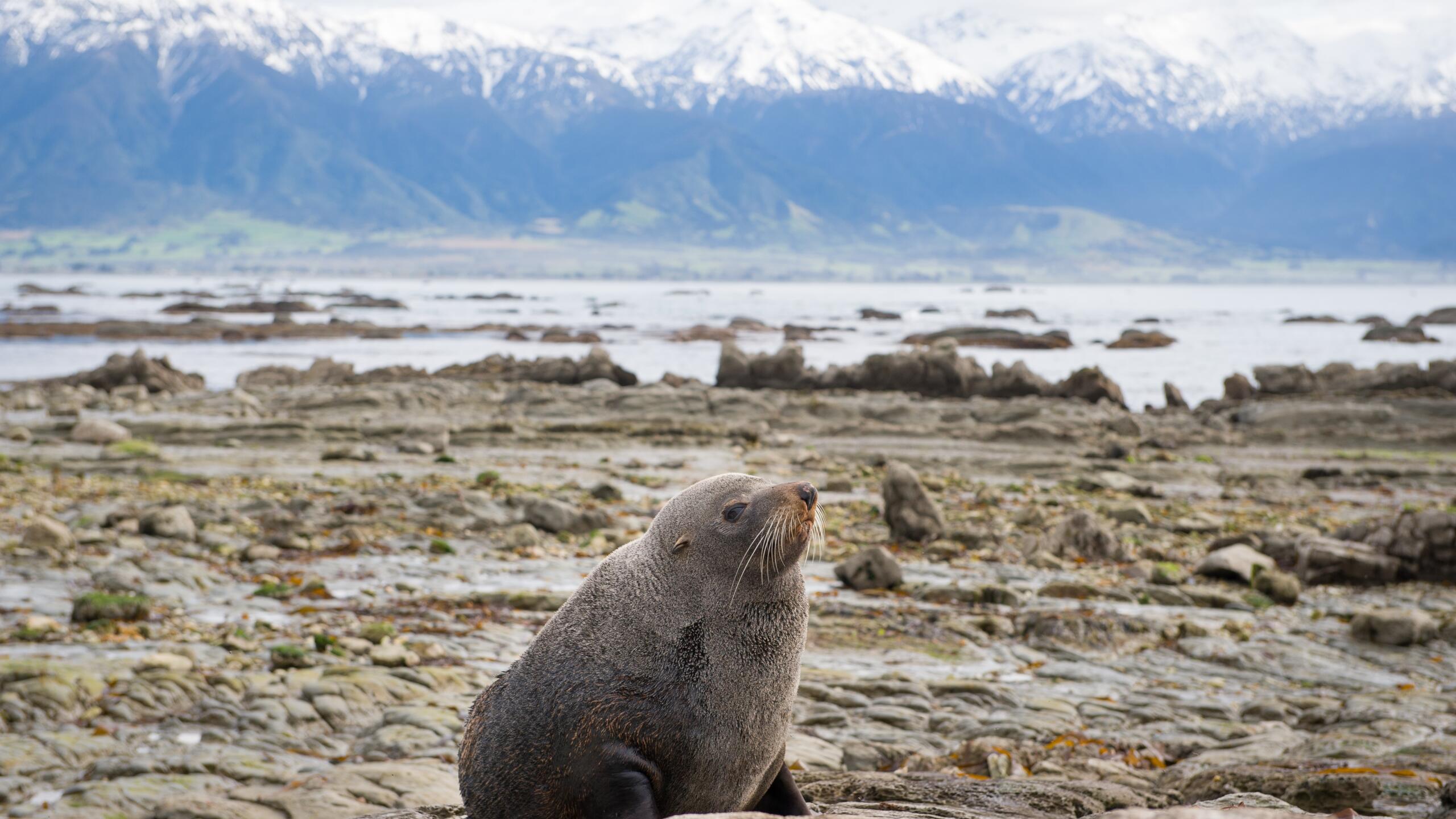
Sharing Space with Wildlife in Kaikōura
Kaikōura is one of the few places in the world where wildlife and community live side by side. New Zealand fur seals rest along our coastline, seabirds nest close to walking tracks, and marine life thrives just offshore.
With that privilege comes responsibility. We all play a role in protecting the animals that make this place so special.
Seals (Kekeno – New Zealand Fur Seals)
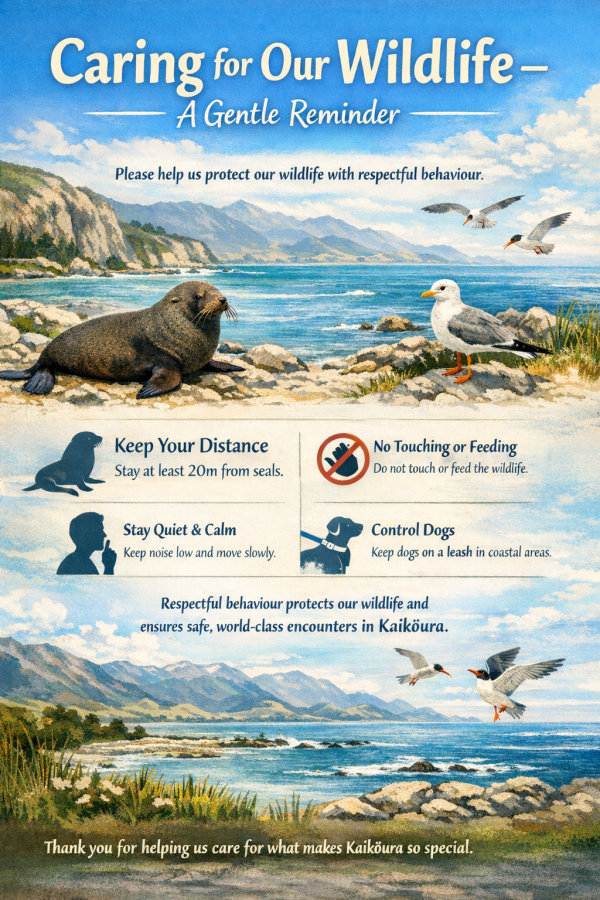
- Stay at least 20 metres away at all times
- Keep even further back from mothers and pups
- Never touch, feed or attempt to move a seal
- If a seal lifts its head, vocalises, or moves toward you — you are too close
- Stay behind the ropes, these are here for the seals protection
Seals may look relaxed, but they are powerful wild animals. Giving them space keeps everyone safe.
Download booklet for more info
Coastal & Native Birds
Many of our birds nest on beaches, rocky shorelines and coastal margins.
- Observe from a distance
- Avoid walking through nesting areas
- Keep noise low
- Do not feed birds
Disturbance can cause birds to abandon nests or expose chicks to danger.
Dogs & Wildlife
- Keep dogs on a leash in coastal areas
- Follow local signage and seasonal restrictions
- Never allow dogs to approach seals or birds
Even well-behaved dogs can unintentionally harm wildlife.
Why It Matters
Respectful behaviour protects wildlife, keeps visitors safe, and ensures Kaikōura continues to be known for authentic, world-class encounters in nature. Thank you for helping us care for this special place.
Who to contact if you see injured wildlife
Seals - Department of Conservation
- Ask: is the seal in danger, injured or being harassed by people or dogs?
- If so, call our emergency hotline 0800 DOC HOT (0800 362 468).
- Never attempt to move or handle a seal yourself: they are aggressive when stressed and it’s important not to separate a mother and her pup.
Coastal & Native Birds
Visit Project Wellbird which provides details on who to contact dependant on species: PROJECT WELLBIRD